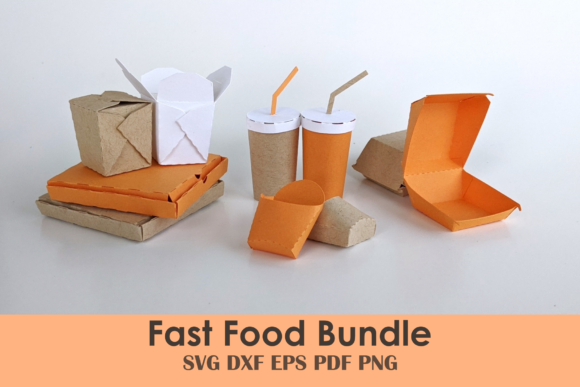
Fast Food Box Mini Template Bundle for 3D SVG Shapes
As a brand designer who has spent years refining visual identities for startups and established businesses, I often find that the smallest details make the biggest impact. Recently, I encountered a graphic design asset called Fast Food Box Mini Template Bundle, and my initial reaction was one of practical excitement. This isn't just another clipart collection; it is a strategic tool designed to elevate packaging visuals and digital marketing materials with a sense of playful professionalism. When you first open this bundle, the mood it creates is immediately approachable yet structured. It speaks to casual branding without sacrificing the polish required for commercial success.
The core value of this asset lies in its versatility as a 3D SVG shape within the broader category of shapes. The description notes that it uses default sizes included on US letter paper, which suggests a user-friendly workflow for immediate application. In a real-world scenario, imagine a small business owner launching a seasonal food product or a lifestyle brand introducing a new line of gourmet snacks. They need to refresh their social media graphics, create eye-catching Pinterest pins, and design packaging inserts that communicate quality instantly. This design bundle provides the foundational geometry needed to build those narratives. Instead of struggling to construct realistic boxes from scratch, the creator can focus on color, typography, and messaging, knowing the structural element is already sound.
Transforming Brand Identity with Visual Consistency
Visual consistency is the backbone of audience trust. When a brand appears across different platforms—from an email banner to a physical package—the visual language must remain cohesive. The Fast Food Box Mini Template Bundle supports this goal by offering uniform shapes that can be customized to fit any brand palette. Whether you are designing a logo for a new bakery or creating editorial layouts for a food blog, these assets ensure that every touchpoint feels intentional. By using these pre-made forms, designers can maintain a strong visual hierarchy, guiding the viewer's eye to the most important information without distraction.
In the context of small business branding, this asset is particularly powerful. It allows entrepreneurs to compete with larger corporations by presenting a professional appearance. A well-structured box graphic can transform a simple product label into a premium experience. When used in packaging design, these elements add depth and dimension that flat illustrations often lack. This 3D effect helps products stand out on crowded shelves or in digital feeds, where competition for attention is fierce. The emotional tone shifts from generic to curated, signaling to the consumer that care has been taken in the presentation of the product.
Integrating Assets into Modern Marketing Campaigns
The utility of this SVG design extends far beyond static images. It serves as a dynamic component in content marketing strategies. For instance, a social media manager planning a campaign for a limited-time offer could use these mini boxes to create a series of promotional banners. Each box could represent a different flavor, size, or variation of a product, creating a sense of variety and abundance. This approach works exceptionally well for Pinterest graphics, where users scan for visually appealing content that promises a tangible result.
Furthermore, these assets are ideal for creating digital product visuals. If you are selling templates, printables, or online courses, showing your product inside a stylized box graphic adds a layer of realism that increases perceived value. It bridges the gap between a digital file and a physical object, making the abstract feel concrete. In web design, these shapes can serve as hero graphics or decorative accents that break up text-heavy sections, improving readability and engagement. The ability to scale these vectors ensures they look crisp on everything from mobile screens to large desktop monitors, maintaining the integrity of the modern design aesthetic.
Navigating Design Limitations and Strategic Placement
While the potential of the Fast Food Box Mini Template Bundle is high, a seasoned designer knows that not every asset fits every context. There are specific scenarios where this creative design element should be used with caution. For formal corporate branding, such as a law firm or a financial institution, the playful nature of fast-food-inspired shapes might undermine the seriousness of the message. Similarly, in dense information layouts or text-heavy ads, adding complex 3D shapes can clutter the visual field, causing the main message to get lost.
It is also crucial to consider the background and contrast. Using these shapes on low-contrast backgrounds can reduce visibility, while placing them in overly minimal designs might make them appear out of place. The key is balance. These assets work best when they act as supporting players rather than the lead actor. They are perfect for campaign headers, social media covers, and branded templates, but they may need to be simplified or de-emphasized when the primary goal is data communication or strict informational clarity. Understanding where the asset competes with the main message is vital for maintaining a professional standard.
Practical Tips for Professional Implementation
To get the most out of this commercial design resource, there are several steps every designer should take before finalizing a project. First, test the asset against your existing brand color palette. Ensure that the shadows and highlights in the 3D rendering complement your brand colors rather than clashing with them. Checking black and white usage is equally important; convert the design to grayscale to verify that the form holds up without relying on color alone.
Placement matters significantly. Preview the asset inside real campaign mockups to see how it interacts with other design elements. Does it look like it belongs, or does it feel pasted on? Testing readability in small sizes is critical for mobile graphics, where detail can easily become muddy. Additionally, compare the asset against competitor visuals to ensure your design stands out while adhering to industry standards. Pay close attention to typography pairing; experiment with serif fonts for elegance, sans serif for modernity, script or handwritten fonts for a personal touch, and display fonts for bold statements. Reviewing spacing and balance will help prevent the layout from feeling cramped.
Finally, always confirm the commercial license before using the asset in paid campaigns or client work. Understanding the terms of use protects both the designer and the business. Whether you are creating Canva templates, printable promotions, or event flyers, ensuring legal compliance is part of professional practice. By following these guidelines, you can leverage the Fast Food Box Mini Template Bundle to create memorable campaign visuals that resonate with your audience.
In conclusion, this graphic design asset offers a robust solution for anyone looking to enhance their visual storytelling. From logo design to product labels, and from editorial design to digital ads, the possibilities are vast. When used thoughtfully, it transforms simple shapes into powerful tools for brand identity and audience trust. For creative entrepreneurs and content creators, it represents an opportunity to elevate their output with a level of polish that was previously difficult to achieve without extensive technical skills.